
Using the right fitness equipment can make your workouts effective and enjoyable. Low-quality machines, on the other hand, ruin your workout experience, reduce training effectiveness, and raise your risk of injury.
The question is: how do you know whether the equipment in your next hotel gym is any good? One shortcut is to look at the brand. Often, the manufacturer alone tells you a lot about what to expect.
In this guide, we cover seven of the biggest fitness equipment brands found in hotel gyms worldwide. For each one, we go beyond the brand history and look at what the equipment actually means for travelers who want a solid workout on the road.
Brands that dominate commercial gyms do not always translate perfectly to the hotel context. Hotel gyms serve a different audience, operate under tighter space and budget constraints, and need equipment that looks presentable, requires minimal maintenance, and works for a wide range of guests. With that lens in mind, here is how the big names stack up.
Technogym

Technogym is a fitness brand founded in 1983 in Italy. A couple of years after launch, Technogym released its first strength-training line and followed it up with a home multi-station in 1986.
From there, Technogym’s management began diversifying into the digital world earlier than most competitors. In 1996, they released the Wellness System, software designed to help people manage their training programs.
Technogym was first chosen as the official training equipment supplier for the 2000 Olympic Games in Sydney, then again for the 2016 Olympics in Rio and recently in 2026 the Winter Olympics in Milano-Cortina, cementing its position as a premium performance brand.
Throughout its history, Technogym has consistently pushed boundaries in the industry, introducing the first cloud platform for fitness and releasing the Technogym Bike in 2019, an indoor bike with integrated live and on-demand cycling classes.
In the hospitality world, Technogym is the dominant brand across Europe. Luxury hotels in particular are drawn to the premium feel: sleek lines, clean finishes, and an overall quality that photographs well and sets the right tone in a high-end fitness room.
That said, some guests and trainers have flagged the biomechanics on certain machines, noting that movement patterns on a few models feel less natural than on competitors. For hotels in Europe, Technogym remains a strong first choice, but the premium price point means a solid maintenance contract is not optional.
Life Fitness
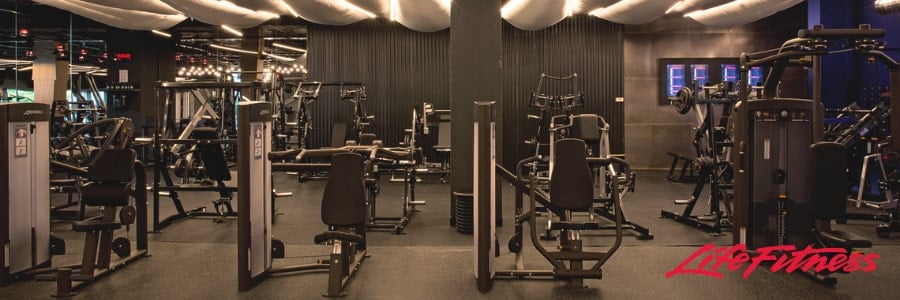
Founded in 1977 and based in the United States, Life Fitness started with a single exercise bike and grew into one of the most widely distributed commercial gym equipment brands in the world. Life Fitness built the first-ever electronic stationary bike, and in 1988 introduced the first computer-based strength-training program for commercial use.
Life Fitness considers itself a “Family of Brands”, which reflects its reach. Under the Life Fitness umbrella you will also find:
- Hammer Strength
- Cybex
- SCIFIT
- ICG Indoor Cycling
Across North America, Life Fitness holds a position similar to Technogym in Europe: the trusted name found in thousands of hotel gyms, from mid-level chains to luxury resorts.
The movement quality is frequently praised, especially the smoothness and reliability of treadmills and cardio machines. The main criticism is visual: Life Fitness equipment can look dated next to newer competitors, and some hotel interiors feel that gap. Hotels investing in a room refresh sometimes prioritize aesthetics and move to Matrix or Technogym for that reason alone, despite Life Fitness performing well mechanically.
If you use SAVE10 at the Life Fitness online shop, you will get a 10% discount on your entire order, excluding already-discounted items.
Hammer Strength
As noted above, Hammer Strength is a division of Life Fitness that focuses almost entirely on traditional strength training. They manufacture plate-loaded machines, racks, and free weights designed for serious lifting.
The brand is well regarded among bodybuilders, powerlifters, and strength athletes. The equipment has a strong reputation for biomechanical accuracy and durability.
In the hotel context, however, Hammer Strength is not a common sight. Its industrial look suits a hardcore training floor better than a hotel fitness center, and the plate-loaded format adds unnecessary complexity for a guest who wants a quick 45-minute workout before a meeting.
Higher-end properties with a guest profile that skews toward serious fitness training occasionally add a Hammer Strength rack or cable station as a premium differentiator. It is a brand with solid credibility, but it is not a natural fit for most hotel gyms.
Matrix

Not to be confused with the 1999 film starring Keanu Reeves, Matrix is one of the fastest-growing players in the commercial fitness market. The brand was launched in 2001 as the premium fitness division of Johnson Health Tech (JHT), a multinational manufacturer and distributor of fitness equipment.
Since its launch, Matrix Fitness has become one of the most profitable brands within JHT, often accounting for up to 70 percent of its annual revenue. What started with a handful of strength and conditioning machines has grown into a portfolio of over 500 products serving commercial gyms worldwide.
Matrix has become one of the most common brands in hotel gyms globally, and the momentum is clear. Several major hotel chains, including Hilton, have made formal commitments to the brand and are equipping their properties at scale.
The reason is straightforward: the equipment looks modern and well-designed, and the functional quality has genuinely improved over the years. Matrix has found a balance between the aesthetic appeal of Technogym and the mechanical reliability of Life Fitness. For hotels looking to upgrade both the look of their gym and the quality of the workout experience, it is a strong option in any tier.
NordicTrack
Most travelers today know NordicTrack as a manufacturer of high-end home and commercial fitness equipment. But the brand’s origins were far more modest. Founded in 1975 by Edward and Florence Pauls as a mail-order business run from their basement, NordicTrack launched with a single product: a ski simulation machine originally branded Nordic Jock and aimed at college ski racers.
Today, NordicTrack manufactures a broad range of equipment, including treadmills, ellipticals, bikes, and rowers, covering the full range of cardio training options a hotel guest might want.
In the hotel gym market, NordicTrack is a niche player rather than a dominant force. You will encounter their machines in properties that have invested in quality home-grade equipment or opted for a cost-effective upgrade over entry-level alternatives. It is not a brand that defines a hotel gym, but where you do find it, the equipment is generally reliable.
BowFlex
BowFlex was established in the mid-1980s with one goal: to bring a genuine gym-like experience into the home of every fitness enthusiast. While other companies were competing for large gym chain contracts, BowFlex developed some of the first versatile multi-gym setups designed for compact spaces.
The appeal was clear. Trainees could invest in a single versatile machine, train at home, and make real fitness progress without dealing with commutes, waiting for equipment, or post-workday crowds.
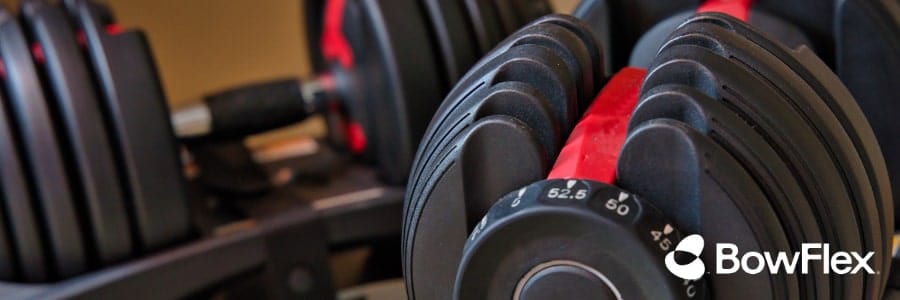
These days, BowFlex offers a wide range of equipment. One of their most widely adopted products in the hotel context is the adjustable dumbbell, which cycles through resistance levels in seconds using a dial or pin system.
For hotel gyms operating with limited floor space, this is a practical solution. A single BowFlex adjustable dumbbell set can replace an entire dumbbell rack, covering the same weight range at a fraction of the cost and footprint. Properties that want to offer free weights without dedicating a full wall to a dumbbell rack have adopted this format widely.
Rogue Fitness
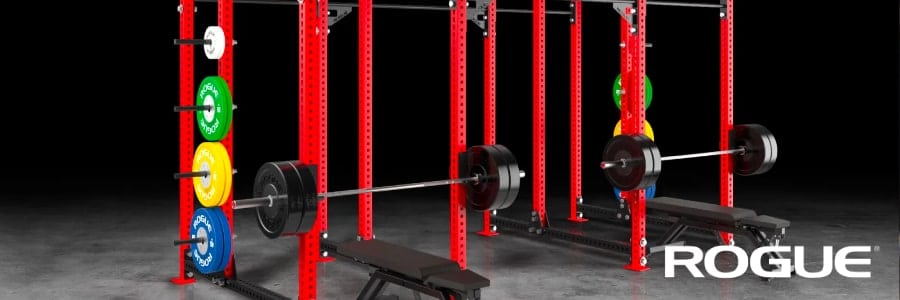
Rogue Fitness was established in 2007. Despite its late start relative to competitors, the brand built a strong reputation quickly. Founder Bill Henniger launched a website after struggling to source all the equipment he needed for his own gym, and the site initially sold gear from other manufacturers before transitioning into full production.
Today, Rogue Fitness manufactures a wide range of CrossFit and strength-training equipment, including barbells, squat racks, weight plates, benches, dumbbells, and medicine balls. They also produce cardio accessories such as the Rogue Echo Bike.
In the hotel gym context, Rogue is a specialist rather than a generalist. A hotel would need a strong strength-training focus and a guest profile to match before investing in Rogue squat racks and barbell setups. The Rogue Echo Bike is the exception: compact, durable, and increasingly present in fitness-forward hotel gyms where air bikes have become a standard cardio option.
Precor (and Peloton)
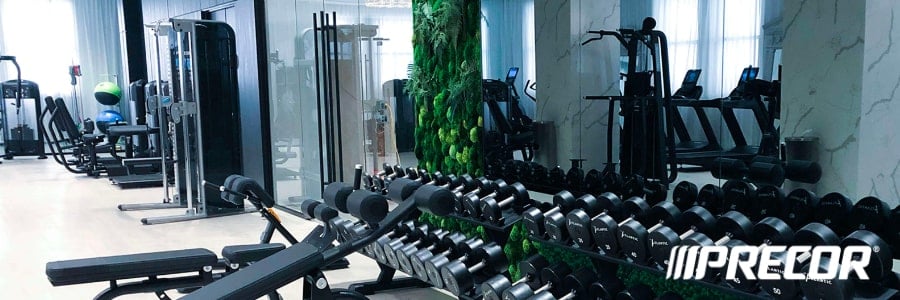
Established in 1980, Precor has grown into one of the most recognized fitness brands in commercial gym settings. The company delivered the first cushioned treadmill, reducing impact for everyday users, and is credited with creating the elliptical trainer, now one of the most popular cardio machines in hotel gyms worldwide.
Today, Precor is recognized as one of the strongest brands for cardio equipment. At the end of 2020, Precor was acquired by Peloton.
Since that acquisition, the two brands have followed different paths in the hotel market. Peloton has grown its hotel footprint substantially, often placing bikes directly in guest rooms rather than limiting them to the gym floor. This approach appeals strongly to the brand’s loyal subscriber base, who want to continue their existing Peloton routine without interruption while traveling.
Precor, meanwhile, appears to be holding steady or gradually declining as a standalone hotel presence. The Peloton acquisition has not injected new commercial momentum into the Precor brand within hospitality, and some properties that previously ran Precor fleets have moved to competitors on their next equipment cycle.
How the Big Brands Compare for Hotel Gyms
Not all fitness equipment is equal, and that gap is more visible in hotel gyms than anywhere else. Space constraints, guest diversity, and maintenance realities put equipment under different pressure than a commercial gym floor. The overview below shows which brands cover which equipment categories and how they position in the hotel context.
| Brand | Hotel Presence | Primary Region | Price Tier | Best Suited For |
|---|---|---|---|---|
| 🔴 Technogym | Very High | Europe | Premium | Luxury and upper-upscale hotels |
| ⚫ Life Fitness | Very High | North America | Mid to Premium | Full-service hotels across all tiers |
| 🔵 Matrix | High and growing | Global | Premium | Hotels wanting modern design and reliable performance |
| 🟠 Precor / Peloton | Medium (Precor declining, Peloton growing) | North America | Mid to Premium | Peloton-loyal guest base; in-room bike programs |
| 🟤 NordicTrack | Low to Medium | North America | Mid | Cardio-focused upgrades in smaller properties |
| ⚪ BowFlex | Medium (adjustable weights) | Global | Budget | Space-constrained gyms needing free weight range |
| 🟥 Rogue | Low (Echo Bike more common) | North America | Mid to Premium | Strength-focused or CrossFit-oriented properties |
It is also worth noting that the hotel gym market has its own niche players. Brands like Star Trac, Impulse, and Toorx have a smaller but dedicated footprint in some properties and regions. They will not replace the big names, but they are worth knowing if you encounter them or are evaluating suppliers.
If you tend to stick with a preferred brand, be aware that many hotel chains have formal agreements with one or two manufacturers to equip their properties. As part of the Hotel Gym Insights data on HotelGyms.com, you can check which brand is primarily used in any given hotel gym before you book. No more arriving to find a single treadmill and a set of 5kg dumbbells when you were expecting a Matrix-equipped floor.
Before your next trip, check the GymFactor score of your hotel on HotelGyms.com. It takes 30 seconds and tells you exactly what to expect from the gym, including the equipment brands, before you arrive.